What is the
value of nature pedagogy in primary education?
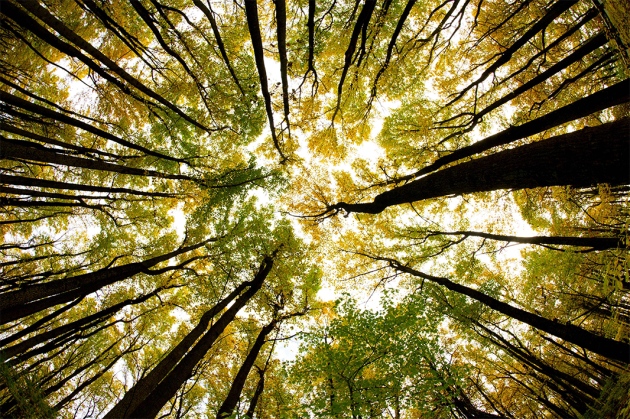
“They need to be outside. They need to explore, get dirty,
find stuff—they need to have fun” (Kriesberg, D, 1999).
The value of Nature in primary education has massively
increased throughout the years, especially from when I was in primary education
but more significantly from the impact of the changing curriculum through the
use of ‘The Donaldson Report’. The focus of environmental education is to
encourage children to explore and experience their local environment, to
develop a sense of wonder and sense of their place (Athman, J.; Monroe, M.C.
2001). When I was in Primary School the only emphasis on the importance of
nature we had was through the use of forest schools. Although forest school is
still a part of the curriculum today and allowed myself the opportunity to
interact with nature at a young age, I feel I’ve missed out in truly engaging
with nature in the way of which wider pedagogy influences throughout the years
have allowed children to do so today.
As previously said, one of the significant changes to
natures importance within education has been because of the ‘The Donaldson
Report’ influencing the curriculum. Donaldson’s four purposes can be linked to
the pedagogical influence of nature. For example, one of the purposes is
creating ‘ambitious and confident learners’ (Donaldson,2015). This involves children
being ready to learn throughout their lives. This can be linked to the value nature
pedagogy because If a child is both ambitious and confident, they’re allowing
themselves to fully engage in different experiences that learning outside
involving nature has to offer. The more ambitious and confident the child is
the more determined and open minded they’ll be with the involvement and influence
of nature throughout their lives in order to learn and succeed to their full
potential. For example, a child who is confident and has an interest for a
certain subject like maths or art, potentially would be more willing to the
idea of learning maths outdoors or even using different resources like sticks,
leaves and rocks to create and work out an answer to an equation or problem further
benefiting and increasing a child’s knowledge within this subject. Similarly,
with art, children can use different resources to create an image, or choose
things from their environment to create or paint. On the other hand, nature pedagogy
can have a significant impact on children who may struggle with subjects within
the curriculum. Some children struggle to engage with learning within a classroom.
By taking children outside to learn different subjects within the curriculum allows
them to potentially build a greater understanding by being more practical using
outdoor resources to their advantage rather than classroom work. By doing it
like this could potentially increase the likelihood of them remembering what they’ve
learnt because they’ve been practical and further associating it with learning
in the future.
Another purpose is having ‘Healthy, confident learners’
(Donaldson, 2015) meaning children are ready to lead fulfilling lives as valued
members of society. The use of the outdoors can be significant to a child’s
health. Allowing children to play and explore outdoors allows many to exercise without
evening knowing whilst having fun as they do so. Nowadays children spend far
too much time indoors using technology than they do exploring outdoors,
therefore child obesity has risen massively. As a child I spent a lot of time outdoors due to the fact that the technology we have today wasn't accessible then. I didn't have a phone when I was in primary school and although I had game consoles I feel I still much preferred to be outside. Children who engage in lots of
physical activities at school tend to engage in more energetic activities at
home, however, children who tend to lack active physical activity tend to engage in non-active
behaviours at home, such as watching TV and excessive use of technology (Dale,
Corbin, & Dale, 2000).
In order to increase the value of nature pedagogy in primary
education its crucial to involve parents and the community. The involvement of
parents and the community allows children to continue their learning
experiences with nature outside of school hours. Having parents, teacher and
other role models showing interest in nature increases the likelihood of
children becoming more engaged. Children are more likely to listen to those they
value and are significantly influenced by. Research suggests that children are more
likely to participate in environmental opportunities if their parents are also interested
in this way, or give them approval and encouragement to take part (Chawla, L.;
Cushing, D.F, 2007).
 In their early years, children's developmental tendency
towards empathy with the natural world which needs to be supported with free access
to an area of limited size over an extended period of time. (Sobel, David, 1996).
Forest schools allows children to do so. As I previously spoke about, my
experiences with nature within primary education were only limited as far as forest
schools. To me, forest schools massively favours and increases the value of
nature pedagogy. We would use natural resources to create dens and images on the ground. Environmental educators need to reintroduce learners to their
local area by exploring and experiencing it, by learning about it and
celebrating it. By doing so, environmental educators help learners develop a
sense of wonder and a sense of place (Athman, J.; Monroe, M.C. 2001). Children
who are unfamiliar with woodlands can become confident in using them allowing a
basis of a life-long relationship with natural spaces. Forrest schools is a
good resource in allowing children to understand the importance of nature and why
we need it whilst building upon life skills such as team building but also dependence.
In their early years, children's developmental tendency
towards empathy with the natural world which needs to be supported with free access
to an area of limited size over an extended period of time. (Sobel, David, 1996).
Forest schools allows children to do so. As I previously spoke about, my
experiences with nature within primary education were only limited as far as forest
schools. To me, forest schools massively favours and increases the value of
nature pedagogy. We would use natural resources to create dens and images on the ground. Environmental educators need to reintroduce learners to their
local area by exploring and experiencing it, by learning about it and
celebrating it. By doing so, environmental educators help learners develop a
sense of wonder and a sense of place (Athman, J.; Monroe, M.C. 2001). Children
who are unfamiliar with woodlands can become confident in using them allowing a
basis of a life-long relationship with natural spaces. Forrest schools is a
good resource in allowing children to understand the importance of nature and why
we need it whilst building upon life skills such as team building but also dependence.
To conclude, its clear that the value of nature pedagogy is
massively important within primary education today and in future. Without
nature pedagogy, children will lack greater experiences and learning with the
outside rather than being purely subjected to indoor learning. Outdoor learning
increases a child’s development and also has a great benefit on a child’s
mental and physical well-being. Therefore, nature pedagogy must always be apart
of the curriculum.
References
Kriesberg, D. (1999) A sense of place. Teacher Ideas Press, Englewood
CO.
(Accessed 5/11/18)
(Accessed 5/11/18)
Athman, J.; Monroe, M.C. (2001) Elements
of Effective Environmental Education Programs. In A. Fedler (Ed.). Defining
Best Practices in Boating, Fishing, and Stewardship Education.Washington DC:
Recreational Boating and Fishing Foundation, pp. 37–48. (Accessed 5/11/18)
https://gov.wales/docs/dcells/publications/150225-successful-futures-en.pdf (Accessed 5/11/18)
http://www.communityplaythings.com/resources/articles/2010/outdoor-play (Accessed 6/11/18)
Chawla, L.; Cushing, D.F. (2007) Education for strategic
environmental behaviour. Environmental Education Research, 13(4):437–452. (Accessed 6/11/18)
Sobel, David, (1996) Beyond
Ecophobia: Reclaiming the Heart in Natural Education, Great Barrington, MA, The
Orion Society. (Accessed 6/11/18)
Comments
Post a Comment